Cornelio Christian Vasquez IV Obituary & Case Details: Cass County, North Dakota – 19-Year-Old Arrested in Fatal Crash That Killed Ian Frye
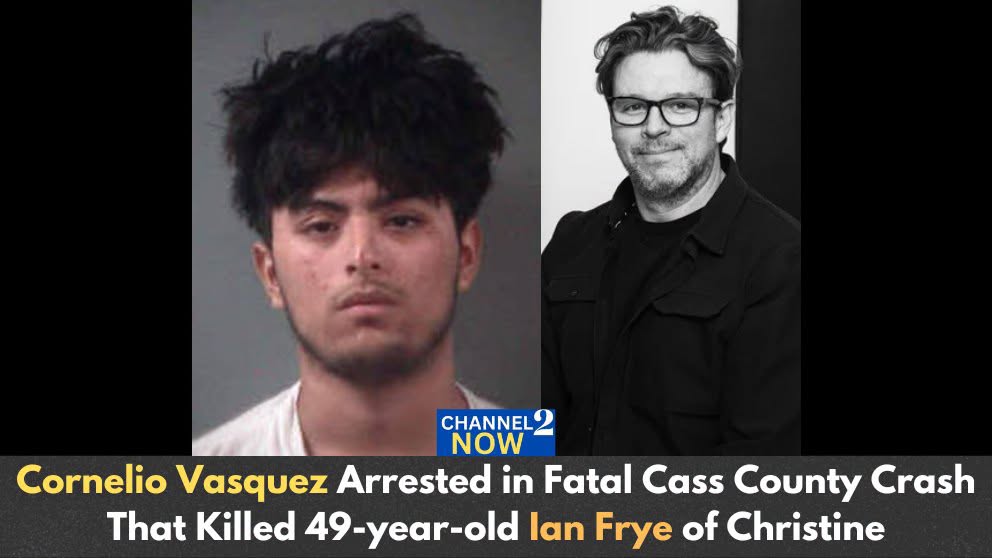
When the quiet, expansive darkness of a rural North Dakota night is suddenly shattered by the wail of police sirens and the horrific crunch of twisted metal, an entire community is left gasping for air. The recent tragedy in Cass County has thrust a heavy blanket of grief over the region, dominating local news and sparking intense conversations about highway safety, teenage recklessness, and the boundaries of the criminal justice system. If you are searching for the Cornelio Christian Vasquez IV obituary details or seeking to understand the full scope of the Cass County, North Dakota fatal crash that tragically killed Ian Frye, you are stepping into a deeply complex narrative. It is a story of a 19-year-old arrested in a fatal crash, a grieving family in Christine, and a legal battle that will inevitably unfold in the public eye.
We are going to explore every single facet of this heartbreaking incident. From the chaotic mechanics of a 109-mile-per-hour police pursuit to the profound loss experienced by the family of 49-year-old Ian Frye, we will leave no stone unturned. This comprehensive deep dive will examine the severe felony charges levied against the teenage driver, the psychological underpinnings of reckless evasion, the media’s role in shaping public perception, and the broader legal philosophies surrounding accountability. This is not just a recounting of a breaking news alert. This is an extensive look at how one reckless decision in the dead of night forever altered the trajectory of countless lives.
A Shattered Night in Cass County: The Tragic Events of August 23, 2026
To truly comprehend the magnitude of this tragedy, we must reconstruct the timeline of events that occurred on August 23, 2026. Shortly after midnight, the rural roads of Cass County, specifically near the intersection of County Road 14 and County Road 81 south of Fargo, became the stage for an entirely preventable catastrophe. A North Dakota Highway Patrol trooper observed a BMW tearing through the night at an astonishing 109 miles per hour in a clearly marked 55-mile-per-hour zone. The sheer physics of driving at that speed on a county road are terrifying. At 109 mph, a vehicle is covering nearly 160 feet per second. The driver’s reaction time is practically negated, and the stopping distance stretches out to hundreds of feet.
When the trooper initiated a traffic stop, the driver, later identified as 19-year-old Cornelio Christian Vasquez IV, made a catastrophic decision. Instead of pulling over and facing a massive speeding ticket and likely a reckless driving charge, Vasquez chose to flee. Law enforcement records indicate that in his desperate bid to evade capture, he turned off the headlights of his BMW. Driving entirely blind in the rural darkness while maintaining triple-digit speeds is a recipe for absolute disaster. The vehicle approached a stop sign at the intersection, blowing completely through it without a moment of hesitation.
In that exact, devastating moment, 49-year-old Ian Frye of Christine, North Dakota, was driving his Honda Accord through the intersection. Frye had the right of way. He had no warning. Without headlights shining from the approaching BMW, Frye could not have anticipated the missile-like impact that was about to strike his vehicle. The violent collision practically disintegrated portions of both cars. First responders rushed to the chaotic scene, navigating the debris field illuminated only by the flashing red and blue lights of the pursuing trooper. Tragically, the sheer force of the impact was unsurvivable for the driver of the Honda. Ian Frye was pronounced dead at the scene, leaving behind a devastated family and a community in shock.
The immediate aftermath was chaotic. Inside the pulverized BMW, Vasquez was not alone. Two juvenile passengers, aged 16 and 17, were also in the vehicle. By some stroke of miraculous luck, all three occupants of the fleeing vehicle were wearing their seatbelts and sustained non-life-threatening injuries. They were quickly transported to Sanford Hospital in Fargo for medical treatment. However, the true damage had been done. A man was dead, a teenager was about to face the most severe criminal charges of his life, and a quiet county was left trying to make sense of the senseless.
The Victim: Remembering Ian Frye and His Impact on Christine, North Dakota
When the news cycle rapidly shifts its focus to the suspect and the sensational details of a high-speed chase, we must deliberately hit the brakes and center our attention on the most important person in this narrative: Ian Frye. At 49 years old, Ian was a resident of Christine, a deeply knit, small agricultural community in Richland County, North Dakota. In towns like Christine, population numbers are low, but community ties run incredibly deep. You do not just lose a resident; you lose a neighbor, a friend, a familiar face at the local store, and a fundamental piece of the town’s fabric.
The sudden and violent nature of Ian Frye’s passing makes the grieving process infinitely more complicated for his loved ones. A traditional obituary often reflects on a life lived to its natural conclusion, detailing decades of achievements, grandchildren, and peaceful twilight years. The Ian Frye obituary, however, is underscored by an agonizing sense of theft. His life was not lost to illness or old age; it was abruptly stolen by the reckless actions of a stranger on a dark county road. This type of traumatic loss sends psychological shockwaves through a family. There was no time to say goodbye. There was no time to prepare. One moment he was navigating a familiar road home, and the next, he was gone.
In rural North Dakota, community support during times of immense tragedy is both robust and deeply moving. Neighbors rally together, bringing casseroles, organizing fundraisers, and offering shoulders to cry on. Yet, beneath the surface of this communal support lies a simmering anger and a desperate plea for justice. How do you explain to a grieving family that their loved one was killed because someone decided to play a real-life video game with a two-ton machine? The void left by Ian Frye cannot be filled by legal proceedings, but the demand for accountability becomes a vital step in the healing journey.
We must also recognize the psychological toll this takes on the first responders who arrived at the scene. Volunteer firefighters, local EMS, and highway patrol officers in rural counties often know the people they are pulling from the wreckage. While it is unclear if the responders personally knew Ian Frye, the trauma of witnessing the gruesome aftermath of a 109-mph broadside collision lingers long after the road is cleared. Memorials, roadside crosses, and candlelight vigils will inevitably mark the intersection of County Road 14 and 81, standing as a stark, solemn reminder of the night Ian Frye’s life was tragically cut short.
The Suspect and the Manhunt: Cornelio Christian Vasquez IV Apprehended
Following the crash and his subsequent medical clearance from Sanford Hospital, the legal machinery began to turn against 19-year-old Cornelio Christian Vasquez IV. Initially, Vasquez was not immediately taken into custody at the hospital while investigators meticulously pieced together the forensic evidence from the crash site. Accident reconstruction experts from the North Dakota Highway Patrol had to definitively prove the speed, the trajectory, and the sequence of events—including the critical detail that the BMW’s headlights were intentionally extinguished.
By Monday, August 24, formal charges were officially filed in Cass County District Court. The sheer weight of these charges prompted a judge to immediately issue a warrant for Vasquez’s arrest on Tuesday, August 25. For a brief, tense period, the 19-year-old Grand Forks resident was considered a wanted fugitive not in police custody. Local news outlets blasted his name and the horrific details of the crash across television screens and social media feeds. The public pressure was immense.
Fortunately, the manhunt was short-lived. Later that same Tuesday afternoon, at approximately 3:00 p.m., authorities successfully located and apprehended Vasquez in Grand Forks. He was swiftly transported and booked into the Grand Forks County Jail, where the heavy steel doors closed on a young man whose life had just taken an irreversible detour.
Adding another layer of complexity to this case is the presence of the two juvenile passengers. State law strictly prohibits the release of their identities, protecting the 16- and 17-year-olds from the massive public fallout. However, their involvement raises critical questions. Were they begging Vasquez to pull over? Did they encourage the evasion? The psychological trauma inflicted upon these two teenagers, who survived a fatal wreck only to watch a man die before their eyes, will require years of counseling. Furthermore, they are now key witnesses for the prosecution. Their testimonies regarding Vasquez’s state of mind, his comments when the trooper activated their lights, and his decision to plunge the car into darkness will be the nails in the coffin during the upcoming trial.
Deep Dive into North Dakota Law: Unpacking the Severe Felony Charges
When you look at the booking sheet for Cornelio Christian Vasquez IV, you are looking at a legal hammer that is about to drop with catastrophic force. The Cass County State’s Attorney’s Office did not hold back, throwing the absolute maximum allowable charges at the 19-year-old. He is currently facing homicide while fleeing a peace officer, manslaughter, fleeing a peace officer in a vehicle resulting in risk of death or serious bodily injury, two counts of reckless endangerment, and reckless driving. Let us break down exactly what these charges mean under North Dakota Century Code.
The most severe charge is Homicide While Fleeing a Peace Officer. In North Dakota, this is classified as a Class A felony. This specific statute was designed to combat exactly what happened on August 23. It applies when a driver causes the death of another human being while intentionally attempting to elude law enforcement. The prosecution does not need to prove that Vasquez intended to kill Ian Frye; they only need to prove that Vasquez was fleeing the police and that this direct action resulted in Frye’s death. A Class A felony in North Dakota carries a maximum penalty of 20 years in prison. For a 19-year-old, a maximum sentence would mean spending the entirety of his youth and early adulthood behind bars.
Then there is the charge of Manslaughter. You might wonder why he is charged with both homicide while fleeing and manslaughter. Prosecutors frequently “stack” charges. If a jury somehow finds a technicality in the fleeing charge, the manslaughter charge acts as a safety net. Manslaughter involves recklessly causing the death of another human being. Driving 109 miles per hour in a 55-mile-per-hour zone, at night, with no headlights, and blowing through a stop sign is the textbook legal definition of extreme recklessness manifesting an extreme indifference to the value of human life.
The Two Counts of Reckless Endangerment stem directly from the presence of the two juvenile passengers in his BMW. By engaging in this horrifically dangerous behavior, Vasquez created a substantial risk of serious bodily injury or death to the 16- and 17-year-old kids in his backseat. Each of these counts represents a separate victim of his reckless behavior.
The legal defense for Vasquez will be an uphill battle on a 90-degree incline. The physical evidence—skid marks (or lack thereof), the data recorders (black boxes) inside the BMW confirming the speed and headlight status, and the dashcam footage from the pursuing state trooper—will be incredibly difficult to dispute. The defense might attempt to argue panic or youthful indiscretion, but the law rarely shows mercy when a completely innocent third party is killed due to a deliberate choice to evade law enforcement.
Legal Philosophy and Public Accountability: Lessons from High-Profile Cases
To truly understand the intense public reaction to the Cass County crash, we have to zoom out and look at the broader legal philosophy regarding public accountability. Why does society demand maximum sentences for vehicular homicide? Why do these local cases generate such visceral outrage? It all comes down to the social contract and our collective demand that those who recklessly endanger the public face severe consequences.
We can draw fascinating parallels between the localized outrage in vehicular homicide cases and the national fervor seen in massive, high-profile legal battles. Take, for instance, the intense public scrutiny surrounding the trials of Harvey Weinstein. While the crimes are entirely different—systemic sexual abuse versus vehicular homicide—the underlying legal philosophy of the public’s demand for accountability is identical. For years, Weinstein operated with impunity, believing his power and status shielded him from the consequences of his predatory and destructive actions. When the media finally dragged his actions into the glaring light of public scrutiny, the societal demand for justice was deafening. The courtroom became a theater of accountability, proving that no one is insulated from the destruction they leave in their wake. In a similar vein, when a driver decides to go 109 mph in the dark, they are operating with a localized, momentary impunity—a belief that the rules do not apply to them in that split second. When that action results in death, the community channels that same demand for strict, unyielding accountability.
Another striking comparison can be found in the legal fall from grace of prominent figures like Rudy Giuliani. Giuliani’s recent legal and financial downfalls stem from a series of reckless decisions, a disregard for institutional boundaries, and a failure to foresee the catastrophic fallout of his actions under a heavy media spotlight. Giuliani pushed the limits of legal and ethical behavior, ultimately resulting in massive defamation judgments and the stripping of his law licenses. It represents a fundamental legal philosophy: actions have consequences, and extreme recklessness—whether in a courtroom, on a political stage, or on a county highway—will eventually violently collide with reality.
For 19-year-old Cornelio Vasquez, his moment of reckless boundary-pushing didn’t take years to catch up with him; it took seconds. But the philosophical outcome is the same. The legal system is designed to act as the ultimate equalizer. It takes the abstract concept of a community’s grief and channels it into a structured mechanism of punishment and rehabilitation. The public trials of Weinstein and Giuliani taught us that the media spotlight forces the justice system to operate with zero tolerance for those who shatter the social contract. Vasquez will face this same zero-tolerance philosophy in a North Dakota courtroom. The community of Christine and the residents of Cass County will not accept a slap on the wrist. They will demand that the legal system reflect the severity of the life that was stolen.
The Psychology of Reckless Driving: Why a Routine Stop Turned Deadly
One of the most agonizing questions asked in the wake of a tragedy like this is simply: Why? Why did a 19-year-old boy decide that outrunning a police cruiser was a better option than pulling over for a speeding ticket? To answer this, we must dive deep into the psychology of teenage driving and adolescent brain development.
Neurologically speaking, the prefrontal cortex—the area of the brain responsible for complex decision-making, risk assessment, and impulse control—is not fully developed until a person reaches their mid-twenties. At 19 years old, Vasquez was operating a high-performance BMW with a brain that was biologically predisposed to underestimate risk and overestimate reward. When the flashing lights of the state trooper illuminated his rearview mirror, his brain likely triggered a massive fight-or-flight response.
In a fully developed adult brain, logic quickly overrides this primal instinct. An adult calculates the cost of a speeding ticket versus the astronomical danger of a high-speed chase. A teenage brain, however, often succumbs to the “flight” impulse. This panic is frequently compounded by the presence of peers. With a 16- and 17-year-old in the car, the psychological pressure to perform, to avoid looking weak, or to escape trouble together creates a toxic cocktail of terrible decision-making.
Furthermore, we have to look at the psychological disconnect created by modern vehicles. A BMW is designed to insulate the driver from the road. At 109 mph, a luxury vehicle might feel smooth, quiet, and deceptively safe. This sensory deprivation tricks a young, inexperienced driver into believing they are in complete control of the vehicle. Turning off the headlights was the ultimate act of cognitive dissonance—a desperate, movie-inspired tactic to “disappear” into the night, completely ignoring the reality that driving blind on a rural intersection is tantamount to playing Russian roulette with a steering wheel. Understanding this psychology does not excuse the behavior in the slightest, but it is vital for lawmakers, parents, and driver’s education programs to comprehend how rapidly a routine traffic stop can escalate into a fatal panic.
High-Speed Police Pursuits: Examining Law Enforcement Protocols and Public Safety
The tragic death of Ian Frye also reignites a highly controversial and heavily debated topic within law enforcement circles: the ethics and protocols of high-speed police pursuits. Whenever an innocent bystander is killed during a police chase, the public inevitably asks if the pursuit should have been terminated before the crash occurred.
According to the North Dakota Highway Patrol, the trooper initiated the stop after observing the vehicle traveling at 109 mph. It is currently unclear how long the pursuit lasted, or if the trooper was actively riding the bumper of the BMW when it entered the intersection of County Road 14 and 81. Across the United States, police departments are increasingly adopting highly restrictive pursuit policies. Many urban departments completely ban high-speed chases for non-violent traffic offenses, recognizing that the risk to public safety far outweighs the need to immediately apprehend a speeder.
However, in rural jurisdictions like Cass County, the policies often differ. The open roads and lack of heavy traffic sometimes give officers more leeway to pursue. But a vehicle traveling at 109 mph with its headlights extinguished presents an apocalyptic level of danger. Law enforcement protocols dictate that an officer must constantly weigh the immediate danger to the public caused by the fleeing suspect against the danger created by the pursuit itself. If a suspect turns off their lights and accelerates toward an intersection, standard modern protocols strongly suggest terminating the chase, turning off the sirens, and relying on radio communication, dashcam license plate capture, or aerial support to catch the suspect later.
The investigation into this crash will undoubtedly include a thorough review of the trooper’s actions and the North Dakota Highway Patrol’s pursuit guidelines. While the ultimate legal and moral blame rests entirely on the shoulders of Cornelio Christian Vasquez IV, law enforcement agencies use these heartbreaking incidents to refine their tactics, ensuring that they do not unintentionally push a panicked teenager into a fatal mistake.
Media Coverage and the True Crime Spotlight in the Digital Age
We live in an era where local news no longer stays local. Before the internet, the Cass County crash would have been a front-page story in the Fargo Forum and mentioned on the evening news. Today, the details of the crash, the mugshot of the suspect, and the heartbreak of the victim’s family are instantly broadcast across global digital platforms. The true crime community, Facebook news groups, and social media aggregators quickly latch onto the shocking details—109 mph, headlights off, a tragic death.
This instantaneous media presence has a profound impact on the case. On one hand, it guarantees transparency. The public pressure ensures that the Cass County prosecutor will aggressively pursue justice. The digital footprint of the arrest warrant being issued and executed in Grand Forks kept the community informed in real-time.
On the other hand, the digital age can be incredibly cruel to the victims’ families. The family of Ian Frye has to navigate their darkest hours in a highly public arena. Comment sections on news articles often devolve into speculation, victim-blaming, or aggressive vitriol directed at the teenage suspect’s family, who are also dealing with the shock of their son’s life-altering actions. The media spotlight acts as a magnifying glass, burning hot and intense. It is a stark reminder that in our highly connected digital society, personal tragedies are instantly commodified into public content. Protecting the dignity of the victim while satisfying the public’s right to know is a delicate tightrope that ethical journalists must walk.
Road Safety in Cass County: Preventing Future Tragedies
Beyond the courtroom and the media, the legacy of Ian Frye must result in tangible changes to road safety in Cass County. County Road 14 and County Road 81 is a rural intersection, and while it may not have the traffic volume of a major interstate, it requires critical safety evaluations.
Local civil engineers and the North Dakota Department of Transportation need to review the crash site. Are the stop signs highly visible? Are there rumble strips approaching the intersection? Should the area be outfitted with flashing red LEDs or overhead illumination? While no amount of engineering can completely stop a vehicle traveling over 100 mph in the dark, advanced warning systems can sometimes provide that split-second difference that saves a life.
Furthermore, community outreach and driver education in Grand Forks and Fargo must aggressively target teenage drivers with the reality of this case. Simulated driving programs that demonstrate the stopping distance at 100 mph, coupled with raw, unfiltered lectures about the legal and human cost of fleeing the police, need to be mandatory. Young drivers must understand that a car is a lethal weapon, and a driver’s license is a profound responsibility, not a right.
As the legal process for Cornelio Christian Vasquez IV slowly grinds forward, the communities of Grand Forks, Fargo, and Christine will watch closely. The scars left on the asphalt of County Road 14 will eventually fade, but the memory of Ian Frye and the devastating consequences of that August night will remain etched into the collective memory of North Dakota for decades to come.
Frequently Asked Questions (FAQ) About the Cass County Fatal Crash
What exactly happened to Ian Frye in Cass County? Ian Frye, a 49-year-old man from Christine, North Dakota, was tragically killed in a fatal car crash on August 23, 2026. He was driving a Honda Accord through the intersection of County Road 14 and County Road 81 when his vehicle was struck by a BMW traveling at 109 mph. The driver of the BMW was fleeing police and had turned his headlights off.
What are the charges against Cornelio Christian Vasquez IV? Cornelio Christian Vasquez IV, 19, faces several severe felony charges. These include homicide while fleeing a peace officer (a Class A felony), manslaughter, fleeing a peace officer resulting in risk of death or serious bodily injury, two counts of reckless endangerment (for his juvenile passengers), and reckless driving.
What is the penalty for Homicide while Fleeing a Peace Officer in North Dakota? In North Dakota, homicide while fleeing a peace officer is categorized as a Class A felony. If convicted, a defendant can face a maximum sentence of up to 20 years in state prison.
Who were the passengers in Vasquez’s car? There were two juvenile passengers in the BMW, aged 16 and 17. Because they are minors, North Dakota state law strictly prohibits the release of their names. Both were wearing seatbelts, sustained non-life-threatening injuries, and were treated at Sanford Hospital in Fargo.
Where was Cornelio Vasquez arrested? After a warrant was issued on August 25, 2026, Vasquez was located and apprehended by authorities in Grand Forks, North Dakota, at approximately 3:00 p.m. He was subsequently booked into the Grand Forks County Jail.
Will there be an investigation into the police pursuit? Standard operating procedure for the North Dakota Highway Patrol involves a thorough internal review of all high-speed pursuits, especially those resulting in a fatality. Investigators will review dashcam footage and radio logs to ensure the trooper followed department safety protocols regarding high-speed chases.