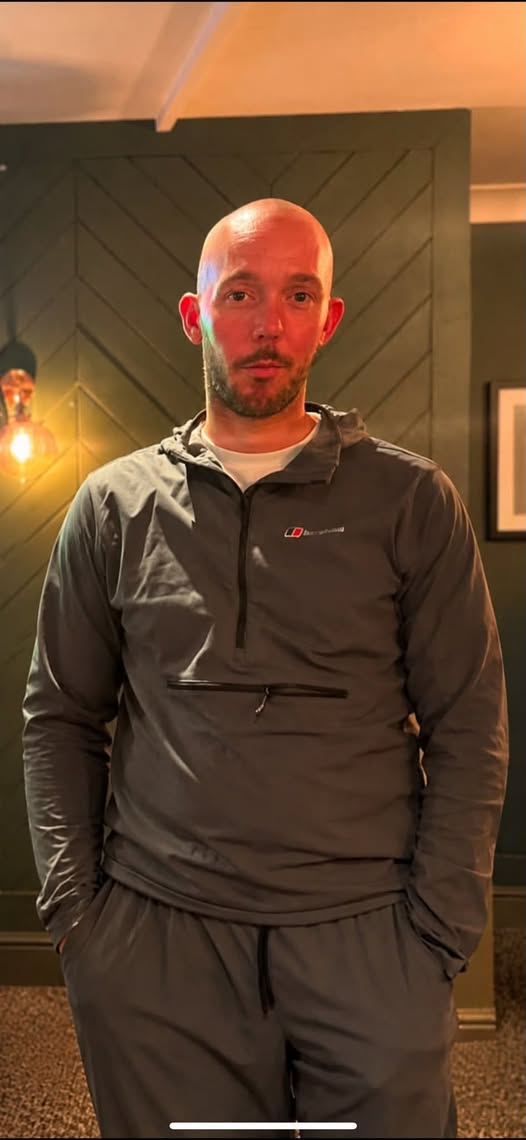
[Rip] Chris Manders Crash: Kingsbury Road – Beloved Man Dies After Fatal Bike Crash
The sudden loss of a life always sends a jarring shockwave through a community, but when it happens on a familiar local street during an ordinary evening, the grief is profound. We are deeply saddened to report on the Chris Manders obituary: Kingsbury Road – beloved man dies after fatal bike crash. The tragic news has left an irreplaceable void in the hearts of his family, his friends, and everyone who had the privilege of knowing him. When someone leaves their home for a standard bicycle ride, nobody expects that it will be their final journey. This deep dive aims to honor Chris’s memory while thoroughly examining the circumstances of the crash, the rising dangers for cyclists, the complex legal philosophy surrounding road fatalities, and the immense impact this tragedy has had on the broader community.
Understanding the Heartbreaking Tragedy on Kingsbury Road
The details surrounding the incident are as devastating as they are sobering. At approximately 7:36 p.m., Chris Manders was involved in a severe and ultimately fatal collision while riding his bicycle. The crash took place along a bustling stretch of Kingsbury Road, a route highly frequented by both local commuters and heavy vehicles.
The Fateful Route: From Asda Minworth to Tyburn Island
To truly grasp the gravity of this incident, you have to understand the specific geography of where it occurred. Chris was traveling along the segment of Kingsbury Road that runs from Asda Minworth toward Tyburn Island. If you live in or frequently travel through this area, you already know that this particular stretch can be incredibly unforgiving. The road often sees a high volume of fast-moving traffic, commercial trucks, and drivers rushing to get to their destinations.
For a cyclist, navigating this route requires absolute vigilance. The transition zones near retail hubs like Asda Minworth often feature cars pulling in and out with divided attention, while the approach toward Tyburn Island introduces complex lane merges and varied speed dynamics. Even the most experienced and cautious riders are at the mercy of the environment around them. The suddenness of the collision at 7:36 p.m. highlights how quickly a standard commute can turn into an irreversible tragedy. Evening lighting, potential driver fatigue, and the sheer volume of metal moving at high speeds all coalesce into an environment where human fragility is painfully exposed.
The Vulnerability of Cyclists in High-Traffic Zones
When we talk about accidents of this magnitude, we have to talk about the inherent vulnerability of cyclists. It doesn’t matter how brightly colored your reflective gear is or how closely you hug the shoulder of the road. When a bicycle shares space with thousands of pounds of motorized steel, the cyclist is always at an extreme disadvantage. Kingsbury Road, like so many arterial roads in modern urban and suburban planning, was fundamentally designed with the automobile in mind. Bicycles are too often an afterthought, squeezed into marginal spaces that offer no physical barrier of protection.
The tragic death of Chris Manders forces us to look critically at how we share our roads. Are we doing enough to protect the most vulnerable road users? A painted white line on the asphalt is not a shield. As we mourn this terrible loss, the circumstances surrounding his fatal bike crash serve as a loud, undeniable alarm bell regarding the daily risks faced by anyone who chooses to pedal instead of drive.
Remembering Chris Manders: The Legacy of a Truly Beloved Man
Before we dive into the legalities and the statistics, we must pause to remember the human being at the center of this heartbreak. Chris Manders was not just a headline, and he was not just a statistic. He was a deeply beloved man whose life touched countless others.
A Life Defined by Connection and Kindness
Those who knew Chris describe a man who lived his life with genuine warmth and an open heart. He was the kind of person who built community wherever he went. Whether it was through shared hobbies, casual conversations with neighbors, or deep, decades-long friendships, Chris had a unique ability to make people feel seen and valued. Friendships were not casual for him; they were investments in shared experiences and mutual support.
In the wake of his passing, the stories pouring out from his inner circle paint a picture of a man who cherished everyday moments. He loved the simple things: a good laugh, a shared meal, the feeling of the wind during a bike ride. It is exactly this vibrant love for life that makes his sudden absence so incredibly hard to process. You do not just lose the person; you lose all the future moments you were supposed to have with them. You lose the advice they would have given, the jokes they would have told, and the quiet comfort of their presence.
How Family and Friends Are Navigating the Sudden Loss
Grief is a strange, non-linear journey, and sudden vehicular deaths introduce a very specific kind of trauma. For Chris’s family and friends, the reality of the Kingsbury Road crash is a heavy burden to bear. One minute, life is proceeding exactly as planned, and in the next minute, everything is permanently shattered.
Family members are currently facing the unimaginable task of organizing their lives around a massive void. Everyday routines are suddenly interrupted by memories of Chris. A familiar song on the radio, an empty chair at the dinner table, or simply driving past the route near Tyburn Island can trigger waves of sorrow. The community has rallied around his loved ones, offering support, dropping off meals, and sharing stories that celebrate his legacy. But the reality is that the road to healing will be long. Community solidarity is a beautiful testament to how much Chris was loved, but it takes time to process how a mundane Tuesday evening turned into a tragedy of this scale.
The Alarming Rise of Urban Cyclist Fatalities
Chris Manders’s death is a deeply personal tragedy, but it is also part of a much larger, highly concerning trend. Across the nation and the globe, the roads are becoming increasingly dangerous for cyclists and pedestrians. We cannot look at this fatal bike crash in a vacuum.
Analyzing Modern Road Safety Statistics
Recent years have shown a staggering increase in traffic fatalities involving non-motorized users. Despite drops in overall driving during recent global events, the lethality of our roads has spiked. Traffic enforcement agencies and urban planners have noted that pedestrian and cyclist fatality rates have hit their highest peaks in decades. Why is this happening?
The data points to a confluence of dangerous behaviors. Speeding has become normalized on arterial roads. In many areas, over half of all fatal crashes occur on roads where the posted speed limit is already higher than what safety experts recommend. When a driver exceeds that limit even slightly, their reaction time drastically decreases, and the force of impact in a collision multiplies exponentially. For a cyclist on Kingsbury Road, a driver’s decision to go just ten miles per hour over the speed limit can be the literal difference between life and death.
The Role of Vehicle Size, Speed, and Distracted Driving
Another massive factor contributing to this crisis is the changing landscape of the vehicles themselves. Today’s roads are dominated by massive SUVs and heavy-duty trucks. These vehicles have taller front ends, which create massive blind spots directly in front of the driver. When a collision occurs between a heavy SUV and a cyclist, the cyclist is much more likely to be pulled under the vehicle rather than pushed over the hood, drastically increasing the likelihood of fatal injuries.
Coupled with this is the epidemic of distracted driving. Smartphones, complex dashboard touchscreens, and aggressive driving cultures have created an environment where drivers are simply not looking at the road. A momentary glance down at a text message while traveling 45 miles per hour means a driver travels the length of a football field entirely blind. We do not yet know all the specific factors that contributed to Chris’s crash, but his death shines a harsh light on these systemic dangers that threaten every single cyclist on the road today.
Legal Philosophy: Negligence, Accountability, and the Pursuit of Justice
When a sudden death occurs on the road, the immediate aftermath is filled with shock and mourning. However, as the dust settles, the conversation inevitably shifts toward accountability, legal liability, and justice. The legal philosophy surrounding traffic fatalities is complex, deeply rooted in the concept of a “duty of care.” Every person operating a multi-ton vehicle owes a strict duty of care to the vulnerable people sharing the road with them.
The Evolution of Public Accountability
In recent years, we have seen a massive cultural and legal shift in how society demands accountability for negligence and misconduct. The legal system is no longer allowing reckless behavior to be swept under the rug as a mere “accident.” An accident implies that nothing could have been done to prevent it. A crash, however, usually involves a failure of duty, a lapse in judgment, or outright negligence.
The philosophy of justice in the modern era relies on the idea that actions have profound consequences, and power—whether it is the power of wealth, status, or simply the power of driving a lethal machine—requires ultimate responsibility. This shift is vital for families seeking justice for loved ones lost in road tragedies. They are no longer accepting weak apologies or lenient traffic citations; they are demanding thorough investigations and real legal consequences.
From Notable Cases to Traffic Law: Lessons from Harvey Weinstein and Rudy Giuliani
You might wonder how high-profile legal battles and celebrity controversies relate to a fatal bike crash on Kingsbury Road. On the surface, they seem worlds apart. However, the foundational legal philosophy connecting them is exactly the same: the dismantling of impunity.
Look at how the justice system has recently handled massive figures of power and influence. The landmark trials of Harvey Weinstein radically shifted how the courts view long-standing abuses of power and systemic negligence. It proved that no amount of influence could shield someone from the consequences of their gross misconduct once the legal lens was sharply focused. Similarly, the legal fallout surrounding Rudy Giuliani regarding defamation, accountability, and the consequences of reckless falsehoods demonstrates that the courts are cracking down on actions that cause severe harm to others.
What these notable cases have done is recalibrate the public’s and the judiciary’s tolerance for reckless endangerment. They established powerful legal precedents that emphasize accountability. This exact same philosophical shift is bleeding into traffic law. Prosecutors and personal injury lawyers are utilizing the same aggressive pursuit of accountability used against figures like Weinstein and Giuliani to hold reckless drivers, negligent city planners, and corporate trucking fleets accountable for wrongful deaths. The message is universal: if your reckless actions destroy a life, the legal system will hold you to the absolute highest standard of accountability. The era of dismissing fatal negligence with a slap on the wrist is ending.
Wrongful Death and the Duty of Care on the Road
In the context of Chris Manders’s fatal crash, this legal philosophy centers around the wrongful death framework. A wrongful death claim arises when a person loses their life due to the legal fault of another entity. This could be a distracted driver, a driver under the influence, or even a municipality that failed to fix a known, deadly road hazard.
The core of this law is the “duty of care.” Drivers must act as a reasonably prudent person would under similar circumstances. Speeding in a heavily trafficked transition zone, failing to check mirrors before turning, or ignoring a cyclist’s right of way are massive breaches of this duty. When families pursue these legal avenues, they aren’t just looking for compensation; they are looking to force systemic change so that no other family has to endure the agony they are feeling.
Media Presence and the Digital Mourning Process
We live in an era where news travels at the speed of light. The way society consumes information has drastically altered how we grieve and how tragic events are reported. The reporting of the Chris Manders obituary and the Kingsbury Road crash is a prime example of the double-edged sword of digital media.
How Sudden Tragedies Unfold in the 24-Hour News Cycle
Within hours—sometimes minutes—of a traffic collision, the news is already circulating online. Citizen reporting apps, social media scanners, and automated news bots scrape data and push it out to the public before authorities have even cleared the scene. For the public, this provides immediate awareness to avoid road closures. But for the family of the victim, it can be an absolute nightmare.
There are countless instances where family members learn about the death of a loved one not from a compassionate police officer knocking on their door, but from a chaotic Facebook post or a hastily written blog article. The media’s hunger for instant clicks often overrides the basic human decency of allowing a family to be notified in private. As authorities continue to establish exactly what happened to Chris, it is crucial that the public treats unconfirmed claims with extreme caution. Speculation on social media does nothing but add noise and pain to a situation that requires solemn respect and factual investigation.
The Impact of Social Media on Grieving Families
Despite the chaotic nature of breaking news, digital media also provides a beautiful space for collective mourning. In the days following a tragedy, social media transforms into a digital memorial. Friends who may live across the country or the world can instantly share their favorite photos, recount touching stories, and organize fundraising efforts to support the grieving family.
These digital footprints become invaluable. When the physical memorial services end and the initial shock wears off, families often return to these digital archives to find comfort. Reading a stranger’s comment about a random act of kindness Chris performed years ago can provide a tiny, vital spark of light in the darkest of times. Digital media connects us in our grief just as strongly as it does in our daily lives.
Community Impact and the Urgent Push for Road Safety Reform
Tragedies of this magnitude cannot simply be mourned and forgotten. They must act as catalysts for real, tangible change. The Kingsbury Road corridor, particularly the stretch from Asda Minworth to Tyburn Island, is now etched into the community’s consciousness as the site of a profound loss. It is time for action.
Demanding Traffic Calming Measures on Kingsbury Road
The community is angry, and rightfully so. When a beloved man dies in a fatal bike crash, the immediate question is: how do we stop this from happening again? The answer lies in aggressive traffic calming measures.
Traffic calming involves physically altering the road to force drivers to slow down and pay attention. This is not just about putting up speed limit signs; it’s about human psychology. Drivers will drive as fast as a road feels safe for them to drive. Wide, straight lanes encourage speeding. To protect cyclists, roads like Kingsbury need protected bike lanes—lanes separated from traffic by physical barriers like concrete planters or bollards, not just a strip of paint.
Furthermore, the community must advocate for raised crosswalks, narrowed vehicle lanes, and improved lighting around major junctions. These infrastructure changes force drivers to be hyper-aware of their surroundings. Yes, it might add two minutes to a driver’s commute, but that is a microscopic price to pay to ensure a cyclist makes it home to their family alive.
The Vision Zero Initiative and Its Importance
Many urban areas are adopting a philosophy called “Vision Zero.” Vision Zero starts with the ethical belief that no loss of life is an acceptable price for mobility. It shifts the burden of safety from the vulnerable road user (the cyclist or pedestrian) to the system designers (city planners and traffic engineers).
If a road design allows a fatal crash to occur, the road design has failed. By implementing Vision Zero principles, municipalities commit to eliminating all traffic fatalities and severe injuries through systemic engineering and strict enforcement. Chris’s passing should serve as the rallying cry for local officials to adopt and aggressively fund Vision Zero frameworks. We owe it to his memory to make our streets survivable.
Navigating Grief and Honoring a Life Cut Short
The aftermath of a fatal accident leaves a long, difficult road ahead for the survivors. Grief is exhausting, both mentally and physically. For the community that loved Chris, moving forward requires immense compassion and intentionality.
Psychological Support for Survivors and Witnesses
It is essential to acknowledge the deep psychological impact of this event. Family members are dealing with sudden, traumatic grief, which often requires professional psychological support to navigate. But they are not the only ones. The first responders who arrived at the scene, the witnesses who saw the crash, and even fellow cyclists who ride that route daily can suffer from secondary trauma.
Communities must ensure that mental health resources are heavily promoted and easily accessible during times like this. Talking about the trauma, engaging in grief counseling, and relying on strong support networks are the only ways to slowly piece life back together after it has been shattered.
Creating a Lasting Memorial for Chris Manders
As time goes on, honoring Chris will transition from immediate mourning to lasting remembrance. The memories of his laughter, his dedication to his friends, and his vibrant spirit will continue to live on through those who loved him. Many communities choose to honor fallen cyclists with a “Ghost Bike”—a bicycle painted entirely white and placed near the crash site as a solemn, powerful reminder of the life lost and a permanent plea for driver awareness.
Whether it is through an annual memorial ride, a community garden, or simply continuing to live out the values of kindness and connection that he championed, Chris Manders will not be forgotten. His life meant too much to too many people. While his journey on this earth was tragically cut short, the impact of his character will ripple outward for generations.
Frequently Asked Questions About the Kingsbury Road Incident
Where exactly did the accident occur? The fatal crash occurred on Kingsbury Road, specifically along the route stretching from Asda Minworth toward Tyburn Island. This area is known for heavy traffic mixing with vulnerable road users.
What time did the collision happen? Reports indicate that the tragedy unfolded in the evening, with authorities noting the time of death at approximately 7:36 p.m.
Who is investigating the crash? Local police and emergency response teams are currently handling the investigation. They are working diligently to reconstruct the scene, interview witnesses, and determine the precise series of events that led to the fatal collision.
How can the community help Chris Manders’s family? The best way to help is by respecting the family’s privacy during this incredibly difficult time. If the family sets up official memorial funds or donation pages, participating in those is a great way to show support. Additionally, checking in on friends and advocating for safer local cycling infrastructure honors his memory.
Why is Kingsbury Road considered dangerous for cyclists? The road frequently sees high volumes of traffic, commercial vehicles, and drivers who exceed safe speed limits. The lack of physically protected bike lanes leaves cyclists highly exposed to fast-moving metal, drastically increasing the risk of serious or fatal injuries.
What legal actions follow a fatal bike crash? While every situation is unique, fatal crashes generally prompt thorough police investigations to determine criminal negligence or vehicular manslaughter. Families may also pursue wrongful death civil lawsuits to hold negligent parties accountable and demand systemic changes to road safety.
The loss of Chris Manders is a devastating blow. As we continue to learn more about the Chris Manders obituary: Kingsbury Road – beloved man dies after fatal bike crash, let us commit to remembering the wonderful life he lived. May his family find peace, and may his passing inspire the vital changes needed to protect every life on our roads.
![[Death] William Baird 54 Tribute: Beloved Individual Remembered With Love, Gratitude, and Lasting Honor](https://tributenews.name.ng/wp-content/uploads/2026/08/police-1-768x512.avif)

![[Obituary] Dr. Kelly Moore Passes On: New Jersey and Pennsylvania Psychology Communities Mourn Educator and Clinician](https://tributenews.name.ng/wp-content/uploads/2026/08/glow-candle-768x489.jpeg)