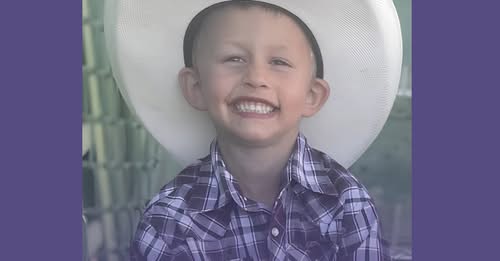
Hayes Hamaker Accident: Remembering the 6-Year-Old Boy from Laramie, Wyoming
Sometimes, the world stops spinning not because of a global event, but because a single, bright light in a local community goes out entirely too soon. On Thursday, August 13, 2026, the tight-knit town of Laramie, Wyoming, and the vast, extended family of the American rodeo circuit experienced exactly that kind of heart-stopping tragedy. Hayes Ryan Hamaker, a vibrant and deeply loved 6-year-old boy, lost his life in a devastating accident on his family’s ranch.
When news of the Hayes Hamaker accident began to spread, it sent shockwaves through Albany County and well beyond state lines. Parents held their children a little tighter. Cowboys and ranchers bowed their heads in silent prayer. The loss of a child is an unfathomable tragedy, one that defies all logic and natural order. In the days following the accident, thousands of people have come together to mourn, remember, and celebrate the short but incredibly impactful life of a little boy affectionately known as “Hazer.”
This article serves as a comprehensive tribute to Hayes. It explores his life, the incredible community that raised him, the painful realities of ranch accidents, and the broader conversations surrounding grief, media presence, and legal philosophy in the wake of unintended tragedies.
Who Was Hayes Ryan “Hazer” Hamaker?
To understand the magnitude of this loss, you have to understand exactly who Hayes was. Born in Laramie, Wyoming, on August 2, 2020, to Ty and Alison Hamaker, Hayes was quite literally born into a legacy of the American West. The Hamaker name comes from a long line of real-deal ranch and rodeo cowboys. Hayes wasn’t just a kid who liked cowboy hats; he was the proud continuation of that authentic, gritty, and beautiful way of life.
Early Years and Big Smiles in Laramie
Even at just six years old, Hayes possessed a personality that seemed far too large for his small frame. Those who knew him best—and even those who only met him once—routinely spoke about his energy. He had an enormous, ear-to-ear smile that could disarm just about anyone. But it wasn’t just his smile that made him special; it was his emotional intelligence.
Hayes had a rare quality, especially for a young child: he made people feel seen. When you spoke to him, he didn’t just passively hear you while looking for the next toy to play with. He paid absolute attention. He looked you in the eyes, listened carefully, and seemed genuinely invested in the conversation. In Hayes’s world, there were no strangers, only friends he hadn’t formally met yet.
A Beloved Member of the Summit Pro Rodeo Family
Hayes grew up surrounded by the dust, dirt, and adrenaline of the rodeo world. He loved being around people, and the rodeo grounds were where his infectious personality truly came alive. Whenever the Hamaker family arrived at an event, Hayes would instantly find himself at the center of a group of both children and adults.
He didn’t just tag along; he was an active participant in the lifestyle. Some of his absolute favorite memories were made sitting shotgun in the family semi-truck with his dad, Ty, hauling animals across the country to various rodeos. These trips weren’t just about getting from point A to point B. For Hayes, they were sacred time spent with his father. They were an education in hard work, a masterclass in animal care, and a front-row seat to the life he adored.
Joy and Curiosity at The Open School
When he wasn’t on the ranch or at the rodeo, Hayes brought his boundless energy to The Open School in Laramie. Teachers and classmates remember him as a child full of curiosity, kindness, and joy. He approached learning the same way he approached life on the ranch—head-on and with a massive grin. His presence left a lasting impression on the school’s community. He wasn’t just a student; he was a friend who helped create an environment where other children felt encouraged to explore and build relationships.
The Tragic Events of Thursday, August 13, 2026
The reality of rural life is that it is incredibly beautiful, but it can also be unforgiving. On Thursday, August 13, just eleven days after he celebrated his sixth birthday, Hayes was involved in a fatal accident on the family ranch.
Understanding the Ranch Accident
While the specific, granular details of the incident have been kept private out of respect for the grieving family—as they rightfully should be—it has been confirmed as a tragic ranch accident. Working ranches are dynamic environments. They feature heavy machinery, large livestock, unpredictable weather, and constant motion. Even with the most vigilant supervision and the strictest safety rules, the unpredictable nature of agricultural environments can lead to split-second tragedies.
For the Hamaker family, a normal Thursday shifted into an unimaginable nightmare in the blink of an eye.
The Immediate Aftermath
The immediate aftermath of an accident like this is a blur of panic, emergency response, and devastating realization. First responders in rural areas like Albany County often travel significant distances to reach remote ranches. These brave men and women do everything in their power to preserve life, but some accidents are simply too severe. When it became clear that Hayes had passed away, a heavy, suffocating blanket of grief fell over the property and soon, the entire town of Laramie.
Community Grief and the Outpouring of Love
When a family loses a child, the grief doesn’t just stay inside their home. It bleeds out into the community, affecting everyone who ever shared a smile or a laugh with the boy. The response to Hayes’s passing has been a testament to just how much he was loved.
Tributes from the Rodeo Circuit
The rodeo community is unlike any other sports or agricultural community in the world. They are fiercely competitive in the arena, but they operate as one massive, deeply connected family outside of it. When news of the Hayes Hamaker accident broke, the entire circuit went into mourning.
Prominent figures in the rodeo world took to public platforms to express their sorrow. People recalled how Hayes would run around the events, offering prayers for sick relatives of family friends, or showing up at surprise birthday parties and completely stealing the show. As one family friend noted, dealing with the loss of an elderly cowboy who lived a full 79 years is hard, but there is peace in knowing they lived a long life. Losing a 6-year-old offers no such peace. It is, in their words, an “impossible loss.”
Digital Mourning and Social Media Solidarity
We live in an era where grief is processed both privately and publicly. Social media platforms like Facebook became virtual memorials for Hayes. Hundreds of posts, thousands of shares, and countless comments flooded in from Wyoming, Colorado, and across the nation. People who had never even met Hayes were brought to tears by the photos of his glowing smile and the heartbreaking reality of his passing. The digital space provided a place for the community to rally around Ty, Alison, and the extended Hamaker family, proving that they were not walking through this dark valley alone.
The Celebration of Life in Laramie
To honor the brief but beautiful life of cowboy Hayes, his parents gathered the strength to host a Celebration of Life. The service took place on Monday, August 24, 2026, at 1:00 p.m. at the UW Cliff & Martha Hansen Teaching Arena in Laramie, Wyoming.
It was a fitting location for a boy who loved the arena dirt. The family made a special request for the attendees: wear blue. Blue was Hayes’s absolute favorite color. That Monday afternoon, the arena was transformed into a sea of blue shirts, blue jeans, and blue cowboy hats. It was a visual representation of a community wrapping its arms around a grieving family. Tears were shed, stories were shared, and a little boy who loved rodeo life was given a send-off worthy of a true cowboy.
Legal Philosophy: Accidental Death in the Modern Era
When a tragedy occurs, human nature often tries to find a reason, a fault, or a villain. This brings us to a complex intersection of grief and legal philosophy.
The Core of Legal Philosophy in Rural Tragedies
In the realm of civil law and legal philosophy, the concept of a “pure accident” is one of the most difficult things for the human mind to accept. We want someone to blame. But true legal philosophy in the context of ranching and agriculture acknowledges the inherent, unmitigable risks of the environment. Unlike cases of negligence or malice, a tragic ranch accident reminds us that the law cannot prevent every heartache, and liability does not always exist where grief resides.
Contrasting Pure Accidents with High-Profile Cases
To truly understand the purity of the legal concept of an “accident,” we must look at how skewed our modern perception of the legal system has become. Today, media presence is entirely dominated by high-profile, malicious legal battles.
Consider the media spectacles surrounding figures like Harvey Weinstein or Rudy Giuliani. When the public consumes legal news, they are usually watching cases built on intentional deceit, systemic abuse of power, or massive civil liabilities rooted in conscious wrongdoings. The Harvey Weinstein trials reshaped how we view criminal liability and the abuse of influence. Rudy Giuliani’s legal battles revolve around defamation, intent, and the consequences of public actions. These massive cases train the public to view every legal event as a battle between good and evil, a search for a villain, or a fight for millions of dollars in damages.
But that is a warped view of the law. The Hayes Hamaker tragedy grounds us back in the somber reality of true, unintentional loss. In a ranch accident involving a child, there is no malice. There is no systemic corruption. There is only a heartbreaking mistake or an unforeseen environmental factor. Comparing the circus of a Weinstein or Giuliani trial to the quiet, devastating reality of a family ranch accident highlights a crucial philosophical point: the legal system is often powerless in the face of pure, tragic accidents. In these moments, the community’s role is not to litigate, but to love, support, and mourn.
Agricultural and Ranch Safety for Children
While the loss of Hayes was a pure accident, it has inevitably sparked quiet conversations in ranching kitchens across the state about agricultural safety.
The Realities of Growing Up on a Working Ranch
Growing up on a ranch is a tremendous privilege. Children learn the value of hard work, they develop a profound respect for nature and animals, and they build a work ethic that serves them for a lifetime. However, ranches are essentially massive, open-air industrial sites. Tractors, skid steers, ATVs, livestock panels, and thousands of pounds of moving animals present constant hazards.
Best Practices for Protecting the Next Generation
While no amount of preparation can eliminate every risk, agricultural communities continually strive to improve child safety. Experts recommend several foundational practices for families living and working on ranches:
- Establish Strict “No-Go” Zones: Children should have clear boundaries where they are not allowed to go without holding an adult’s hand, such as near heavy machinery operation zones or certain livestock pens.
- Visibility is Key: On a ranch, line of sight is everything. Ensuring children wear bright colors (like Hayes’s favorite bright blue) can help equipment operators spot them instantly.
- Keys Out of Ignitions: When tractors and trucks are not in active use, keys should be removed to prevent accidental engagement.
- Age-Appropriate Tasks: It’s vital to ensure that the chores given to young cowboys and cowgirls perfectly match their physical and cognitive development levels.
Through education and community support, the ranching world continually works to protect its most precious asset: its children.
The Psychological Impact of Losing a Child
The physical accident is only the beginning of the journey for the family. The psychological aftermath of losing a 6-year-old child is a landscape of complex, unrelenting grief.
Collective Grief in Tight-Knit Communities
In a city like New York or Los Angeles, an individual’s passing might go unnoticed by their neighbors. But in Laramie, Wyoming, and within the Summit Pro Rodeo family, a loss like this is felt collectively. Psychologists refer to this as collective trauma. When a community’s identity is intertwined with the people in it, the sudden removal of a bright light like Hayes leaves a literal void.
Parents in the community often experience secondary trauma. They look at their own six-year-olds and are hit with the terrifying realization of how fragile life truly is. This shared pain, while immensely heavy, is also the glue that holds the community together.
Finding Light in the Darkest Times
For Ty, Alison, and Hayes’s sister, the grief is an impossible mountain. Surviving the loss of a child requires an unimaginable level of resilience. Support systems—friends dropping off casseroles, neighbors taking over the ranch chores without being asked, and people sending endless prayers—are the vital lifeblood that helps a grieving family survive the initial shock. Over time, the community will help the family transition their acute grief into a lasting, beautiful legacy for Hayes.
Media Presence and the Shift in Public Mourning
The media’s role in this tragedy highlights a massive shift in how society handles mourning. A generation ago, an accident in Laramie would have stayed in Laramie. The local newspaper would print a short obituary, and the town would attend the funeral.
Today, the digital footprint of grief is immense. A quick look at social media shows that news of the Hayes Hamaker accident reached people across the globe within hours. Rodeo photographers, journalists, and family friends used their platforms to share pictures of Hayes’s beaming smile. While this constant connectivity can sometimes feel overwhelming for a grieving family, it also serves a beautiful purpose. It ensures that Hayes’s story isn’t confined to Albany County. His joy, his love for rodeo, and his bright spirit have touched thousands of lives digitally, creating a permanent, global testament to his existence.
How You Can Support the Hamaker Family Today
In times of profound helplessness, people desperately want to do something to help. The Hamaker family has graciously provided avenues for those who wish to honor Hayes’s memory.
Instead of flowers, the family has requested that memorial donations be made in Hayes’s name to two institutions that mean a great deal to them:
- Children’s Hospital Colorado: A premier facility dedicated to saving and improving the lives of children across the Rocky Mountain region.
- The Open School in Laramie, WY: The beloved school where Hayes spent his days learning and playing. The school has expressed hopes of using the memorial donations to add a special piece to their playground in his honor, ensuring that his legacy of joy continues for future generations of students. Donations can be made via UniWyo Credit Union, PayPal, or by mailing a check directly to the school on South 24th Street in Laramie.
Honoring a Legacy That Was Just Beginning
Hayes Ryan Hamaker only got six years on this earth. By any metric, that is incredibly unfair. But the measure of a life isn’t just counted in days or years; it’s measured in the impact left behind.
Hayes lived a life full of dirt, animals, trucks, learning, and absolute love. He never had to experience the cynicism of adulthood. He only knew the warmth of his mother’s hugs, the pride of riding with his dad, the thrill of the rodeo arena, and the joy of making a new friend. While his physical presence is gone, the “Hazer” brand of happiness will remain permanently etched into the hearts of the Wyoming ranching and rodeo communities.
When the dust settles in the arena and the Wyoming wind blows across the family ranch, those who loved him will feel him there—riding his horse on the clouds, smiling that big, ear-to-ear grin, and waiting patiently until they can all be together again.
Frequently Asked Questions (FAQ)
What happened to Hayes Hamaker? Hayes Ryan Hamaker, a 6-year-old boy from Laramie, Wyoming, tragically passed away on Thursday, August 13, 2026, due to a fatal accident on his family’s ranch.
Who are Hayes Hamaker’s parents? Hayes is the beloved son of Ty and Alison Hamaker, a family deeply entrenched in the ranching and professional rodeo community.
When was the celebration of life for Hayes? The Celebration of Life was held on Monday, August 24, 2026, at the UW Cliff & Martha Hansen Teaching Arena in Laramie. Attendees were asked to wear blue in his honor.
Where can I send donations in memory of Hayes? The Hamaker family has requested that in lieu of flowers, donations be made in Hayes’s name to either Children’s Hospital Colorado or The Open School in Laramie, Wyoming.
What was Hayes known for? Friends, family, and teachers remember Hayes for his outgoing personality, his enormous smile, his deep emotional intelligence, and his absolute love for the rodeo and ranching lifestyle.